Claude Code creator demonstrates vibe coding, setting the community buzzing
Claude Code creator Boris Cherny detailed his workflow — triggering intense reactions across the engineering community.


Claude Code creator Boris Cherny detailed his workflow — triggering intense reactions across the engineering community.
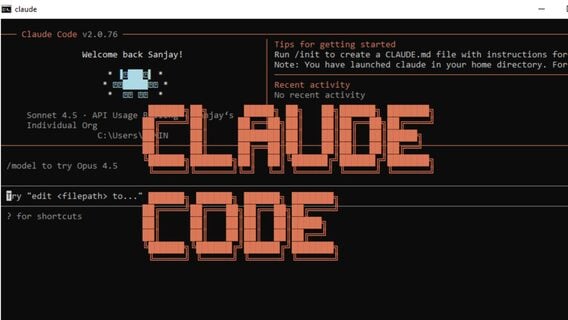
Claude Code creator Boris Cherny detailed his workflow — triggering intense reactions across the engineering community.
Cherny, who leads Claude Code at Anthropic, uses an approach that radically differs from traditional linear programming models. Instead of the sequential «write-test-fix» workflow, he simultaneously runs multiple AI agents.
I’m Boris and I created Claude Code. Lots of people have asked how I use Claude Code, so I wanted to show off my setup a bit.
— Boris Cherny (@bcherny) January 2, 2026
My setup might be surprisingly vanilla! Claude Code works great out of the box, so I personally don’t customize it much. There is no one correct way to…
«I run five Claude instances in parallel in the terminal,» Cherny explains. He distributes tasks between tabs: one agent runs tests, another handles refactoring, while a third writes documentation. Additionally, he uses several Claude sessions in the browser, switching between them as needed.
A key detail is his model choice. Contrary to the industry’s push for maximum speed, Cherny prefers Anthropic’s «heaviest» and slowest model — Opus 4.5. According to him, it requires less human oversight and works better with tools, ultimately saving time. «Even if it’s slower, the result comes faster because you don’t have to constantly correct it,» he notes.
To solve AI’s «forgetfulness» problem, the Claude Code team employs a simple but effective technique. Each repository contains a CLAUDE.md file where developers record all previous agent errors. Claude then considers these rules in future interactions. This way, each mistake becomes a permanent constraint, and the AI gradually adapts to the specific project and team style.
Cherny also actively automates routine processes. Using slash commands, he assigns complex action sequences to the agent, from commits to opening pull requests. Separate sub-agents handle application verification, architecture simplification, or final pre-release testing.
He identifies the «verification loop» as a crucial element: Claude doesn’t just write code but also verifies it by running tests, browser scenarios, and iteratively fixing errors. According to Cherny, this approach improves the quality of results twofold to threefold.