"No longer writing code": Anthropic and OpenAI engineers delegated 100% of their work to AI — what this means for the market
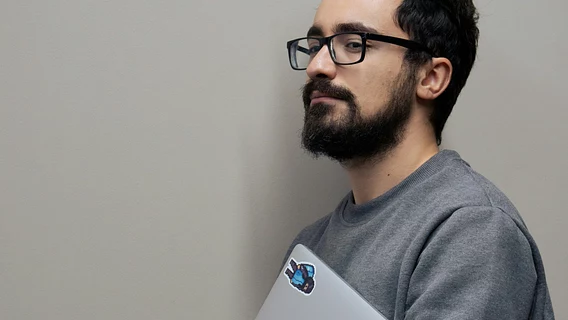
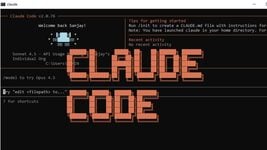
Inside Anthropic, something that would have sounded like hype just a couple of years ago is happening: Claude Code creator Boris Cherny says he hasn’t manually written any code at all for more than two months.
Inside Anthropic, something that would have sounded like hype just a couple of years ago is happening: Claude Code creator Boris Cherny says he hasn’t manually written any code at all for more than two months.
«For me personally — it’s been 100% for more than two months, I don’t even make small edits manually. Yesterday I submitted 22 pull requests, the day before — 27. Each of them was written 100% by Claude,» he wrote on X in response to vibe-coding author Andrej Karpathy’s post.
As always, a very thoughtful and well reasoned take. I read till the end.
I think the Claude Code team itself might be an indicator of where things are headed. We have directional answers for some (not all) of the prompts:
1. We hire mostly generalists. We have a mix of senior…
According to Cherny, across Anthropic AI is writing «practically 100% of code.» The company’s official stance is slightly more cautious: it estimates that between 70% and 90% of the code is AI-generated, with Claude Code itself being roughly 90% produced by the agent.
And this isn’t an isolated case. An OpenAI researcher known as Roon also declared: «100%, I don’t write code anymore.» In a separate post, he added: «Programming has always been an unavoidable pain for almost everyone who wanted computers to do useful things. Glad that’s over.»
Anthropic CEO Dario Amodei said at the World Economic Forum that the industry could be just 6-12 months away from AI performing most or all software engineering work from start to finish.
While this remains an ambitious prediction, the pace is impressive. Claude Code has become highly popular in the industry. When users noticed it was essentially a universal agent, Anthropic launched Cowork — a version for non-coders. The team built it in about a week and a half, mainly using Claude Code itself.
Cherny says the tool took off almost immediately inside the company: «I’ve never enjoyed work as much as I do now. All the routine parts are handled by Claude, and I can be creative. I can think about what to build next.»
He uses the model not only for coding but also to send automated messages to colleagues on Slack. «Engineers feel like they’ve been freed from shackles,» he says.
Outside leading AI companies, the figures are more modest. At Microsoft, according to Satya Nadella as of April 2025, AI generated about 30% of code. Salesforce reported similar numbers. Research published in *Science* found that about 29% of Python functions on GitHub in the U.S. are AI-generated (the share is lower in other regions).
So 100% is currently a story from the cutting edge of the industry. But Cherny is confident that in the coming months, most of the industry will see similar figures — some taking longer than others. Then similar metrics will appear in computer work unrelated to coding.
As Fortune notes, the main question isn’t technological but career-oriented: what role remains for an engineer if AI writes the code. This is no longer an experiment but a systemic shift. Anthropic’s hiring approach is changing: the team is focusing more on recruiting generalists rather than specialists. «Not everything people learned previously transfers directly to coding with LLMs,» Cherny writes. «The model can fill in many of the details.»
The problem is especially sensitive for juniors. Entry-level positions have decreased, coinciding with the growth in AI-written code (though the trend likely has multiple causes). If junior engineers used to build skills through routine tasks, those opportunities are now often handled by models.
Yet limitations haven’t disappeared. Karpathy warns that models can make «subtle conceptual errors,» overcomplicate solutions, and introduce dead code. Nevertheless, proponents who have fully transitioned to AI-assisted coding are optimistic that quality will improve over time.
В рабочем дне 8*(60-10)=400 минут (10 минут отдыха в час, чтобы глаза не вытекли).
То есть Боря делает один PR в 16 минут, если вообще ничем другим в течении дня не занимается. Иначе на весь процесс от понимания и постановки задачи для AI до мержа у него уходит даже меньше 16 минут!
К слову, если в компании Бори есть процесс ревью, не лишним будет заметить, что скорость ревью находится в районе 10 строчек кода в минуту. Впрочем, возможно, что в этой компании является нормой, когда какой-либо функционал понимает 1 человек на всю компанию.
Какой хороший мультимиллионер Боря. Наверное, Haiku в работе пользуется - для его 5-минутных сессий кодинга мощные модели не нужны.
Выводы делайте сами.
Пользователь отредактировал комментарий 25 сентября 2026, 17:48



Релоцировались? Теперь вы можете комментировать без верификации аккаунта.
Боря делает 22-27 PR в день, в среднем 25.
В рабочем дне 8*(60-10)=400 минут (10 минут отдыха в час, чтобы глаза не вытекли).
То есть Боря делает один PR в 16 минут, если вообще ничем другим в течении дня не занимается. Иначе на весь процесс от понимания и постановки задачи для AI до мержа у него уходит даже меньше 16 минут!
К слову, если в компании Бори есть процесс ревью, не лишним будет заметить, что скорость ревью находится в районе 10 строчек кода в минуту. Впрочем, возможно, что в этой компании является нормой, когда какой-либо функционал понимает 1 человек на всю компанию.
Какой хороший мультимиллионер Боря. Наверное, Haiku в работе пользуется - для его 5-минутных сессий кодинга мощные модели не нужны.
Выводы делайте сами.
Пользователь отредактировал комментарий 25 сентября 2026, 17:48