"I hope we are the last generation of beaten children." Tech professionals reveal how the belt affected them — A difficult read
Four stories about childhood abuse.


Four stories about childhood abuse.
Four stories about childhood abuse.
According to data from the End Corporal Punishment initiative, associated with WHO, corporal punishment is the most widespread form of violence against children worldwide. Sometimes even people who clearly condemn violence in general still believe that a child can be «spanked» as punishment for misbehavior or «for preventive purposes.»
As of early 2026, a complete ban on corporal punishment of children exists in only 70 out of approximately 200 countries. In the region, Latvia banned hitting children at the legislative level in 1998, Ukraine in 2004, Poland in 2010, and Lithuania in 2017. Currently, the list of countries that prohibit any corporal punishment of children includes not only Sweden, Norway, Germany, and Iceland, but also Zambia, South Sudan, Kenya, Congo, and Laos—countries traditionally considered part of the Global South. Belarus is still not on the list (neither are the USA, Australia, Canada, or Italy).
Why do many parents continue to hit their children even in the 21st century? And how does it affect the children themselves? We asked our readers who experienced violence from their own parents to share their stories.
Maxim’s* first memory of physical violence from his mother dates back to elementary school (before that, he only remembers emotional abuse):
—My mother was helping me with my homework. There was a task: I needed to show a puppy the shortest path home. There were three options. The first time, I pointed to a zigzag line. A straight line seemed too simple to my child’s mind; I was trying to guess which answer would satisfy my mother. After giving the wrong answer, I received a slap on the back of my head. The second option I named was a wavy line—for this, I got another slap.
Later, there were occasional episodes when my mother beat me with a belt or jump-rope—not often, not always hard or painful, but it was accompanied by psychological abuse. For instance, I was convinced that I shouldn’t shield myself when being beaten, that I should stoically endure the punishment if I had «misbehaved.»
My brother was beaten more often. He was less obedient and more strong-willed, and therefore harder to manage. Even though I wasn’t the one being beaten, it still made a strong impression on me. I received a very clear signal: if you’re bad and disobedient, the same will happen to you.
There’s one episode that particularly stuck with me. As a teenager, I started stealing money. I wasn’t giving the school lunch money to the cafeteria, even though the school did not allow opting out of this service, and everything was quickly discovered. By that time, I didn’t have a trusting relationship with my parents; there was only the fear of being rejected if I became «inconvenient» or «embarrassing.» I spent the money on computer clubs, a hobby that seemed shameful to me, something I couldn’t admit to.
After one such incident, my mother said to me, «Do you know that thieves used to have their hands cut off?» Then she gave me a bread knife—large, with serrations—and told me to cut my arm. I complied and began sawing at my left arm. My mother stopped me, but the scar is still visible. Looking at it, I don’t think about how badly I behaved, but about how someone must lack empathy for their own child to act like that.
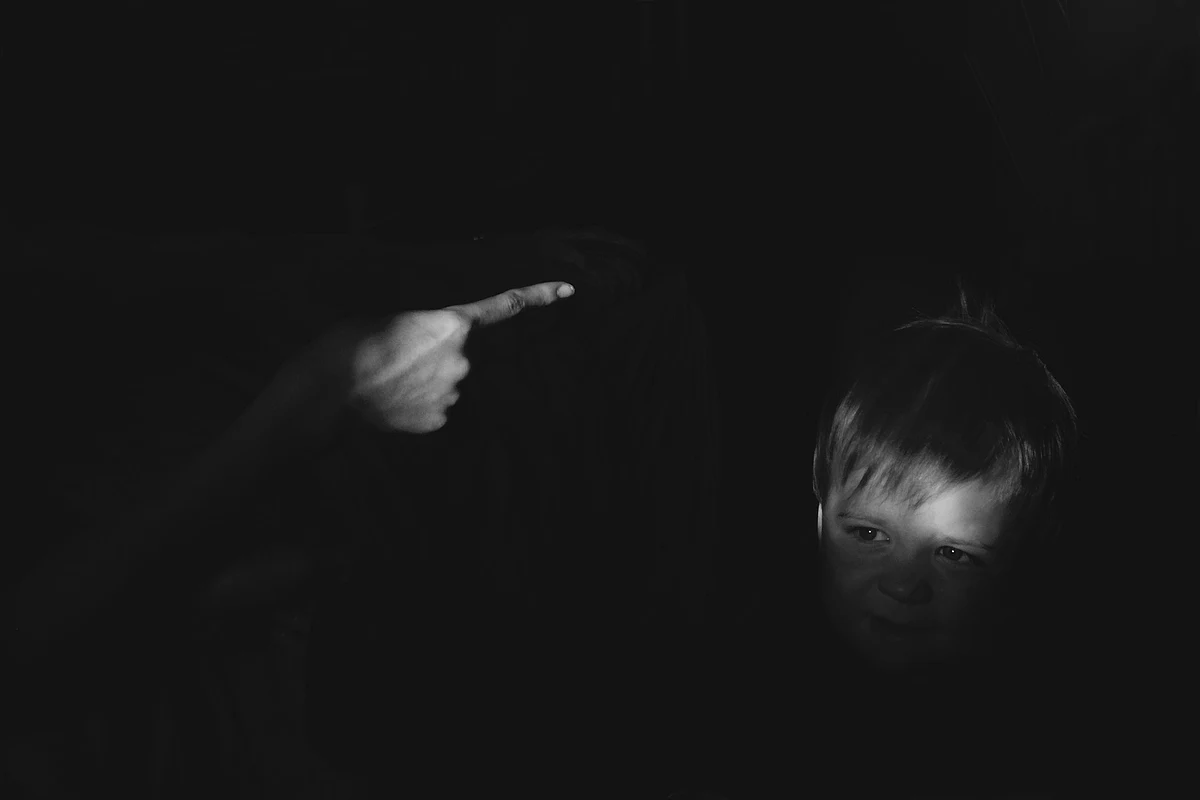
My father was less violent. Most often it happened when he was drunk. I remember one episode in fragments: I don’t remember how it started, but at some point I began calling him an alcoholic and a homeless person. He became furious, started beating me, and then dragged me into the bathroom and, as I remember it, began drowning me, periodically asking if I had cooled down. At some point, my will to resist was broken, and I gave up—I started saying I was wrong, that I loved him, and so on. Then came the most disgusting episode: he undressed me and flicked my genitals, joking about my «funny penis.»
When my father was sober, I can recall only one episode of violence. I was sitting at the table trying to figure out how to draw a treble clef. My father approached, asked what I was drawing. I answered honestly, after which I was accused of lying and received a slap on the head. Only years later did I realize that the drawing might have resembled penises—at that moment, I didn’t even know what I was being hit for.
Why did my parents act this way? Regarding the most vivid episodes, my mother, in my view, acted this way because of her inability to deal with public scrutiny. At some point, she felt shame and guilt, and she felt so bad that she needed to find the source of this shame and take revenge on it. To understand the situation and take responsibility requires being truly adult.
I think my mother doesn’t feel unconditional love for me, which is usually expected from a mother. Public opinion turned out to be more important to her than her own children. My brother and I were perceived more as a project in which she invested many resources. And she loves us not as individuals but as the result of her work.
With my father, it’s a different situation. He didn’t have a healthy parenting example: he grew up in an orphanage despite having living parents. My authoritarian mother often suppressed him, and he could only be himself a little when intoxicated, while remaining filled with resentment.
After I grew up, I tried to talk with my mother about what happened in childhood. But I faced accusations, devaluation of my feelings, and a clear message that «there’s no need to stir up the past» and that it should be left alone. Such dialogues with my father were more successful: he admitted he was wrong and said he was sorry it happened.
How have the consequences of parental violence affected my life? For a long time, I was ashamed to talk about what happened in my family. I’m still cautious in relationships and don’t trust easily. When an adult who should protect you shows violence, what trust in the world can there be? You constantly have to read signals about where and for what you might be punished. I developed excessive strictness toward myself: I need to be the best, strive for perfection to please my mother and earn her love, never to upset or disappoint her.
Now I’ve come to acceptance and understanding that it wasn’t about me and that I won’t achieve or earn true maternal love. There’s still discomfort being around my parents: I catch myself involuntarily choosing words to make my mother have a better impression of me and my environment.
I have a young daughter, and I absolutely do not allow violent methods of upbringing. I don’t want her to grow up feeling that she can’t rely on the people closest to her and with a constant fear of being rejected if she becomes inconvenient. For me, the answer to the question «why you shouldn’t hit children» is as obvious as the answer to «why you shouldn’t hit the elderly.»
I wanted to share my thoughts and memories because our family appeared prosperous from the outside. We always had food, neat clothes, a clean home. I would even say it was a demonstrably clean home. And sometimes behind the walls of such homes, parents often forget about other things. And terrible things happen that outsiders don’t suspect. Love your children, take responsibility for them.
When Vera* was a child, she and her mother were beaten by her father:
—My father drank heavily for as long as I can remember. Being an authoritarian person, he had high expectations for all family members. Anything could trigger a scandal and punishment: prepared food, cleanliness of the house, grades at school. And when drunk, he was completely unpredictable, beating my mother and me.
Physical punishments were a common practice for him. They were accompanied by psychological abuse: devaluation, predicting a future as a janitor or milkmaid, promising to punish me later. This was a special torture, as the punishment could come at any random moment: a day later or a week later, so you lived on pins and needles).
We lived in a tiny apartment. I remember how during my father’s drunken rampages, my mother and I would go sleep on the kitchen floor. And how we froze every time my father got up to go to the bathroom. I will never forget that animal terror, which creates a desire to disappear.

Unfortunately, my mother didn’t protect me. During punishments, she stood nearby, crying, wringing her hands, but did nothing. I asked her many times to get a divorce, but she always replied that she had nowhere to go. Later, I realized that she herself considered physical punishment an acceptable method of upbringing. This was very bitter to understand.
As an adult, I never managed to discuss this childhood pain with my father. And it seems it would have been pointless: he would never have admitted his guilt.
Although I saw similar families around me, I was always very ashamed to tell anyone about what was happening to me. Only after some time did I realize: what my father did didn’t characterize me as a bad person. It wasn’t my fault, but his.
He was a very cruel person to both people and animals. He himself had a similar childhood, probably that influenced him. Sometimes victims of physical punishment become supporters of such an approach to upbringing. After all, they turned out normal. But did they really turn out normal? Very questionable.
How has all this affected me? Those events have a complex set of consequences that I’m now figuring out and dealing with, with varying degrees of success. Four years in therapy have helped smooth them out, but not eliminate them completely. A manic need to control everything (because in childhood it was vital), difficulty in dividing responsibilities and delegating, difficulty in accepting help and care. Impostor syndrome, because for my father I was never good enough, despite excellent studies at school and university, and now a high-paying job and excellent living conditions, a wonderful family. And also the need to be good for everyone around, sometimes to my own detriment.
Of course, such a childhood toughened me: I know that I can handle anything, I’m very empathetic and can easily read other people’s emotions, I’m hardworking and stubborn in achieving my goals. But I would gladly trade all this simply for not having all my childhood memories colored black. And for my parental home to be perceived as a place of strength, where I am safe and loved.
This is what I’m trying to give to my child now: unconditional support and love. Through her, I give love to my little self. There can be no question of physical punishment. You can’t hit people. Period. And I will always stand up in her defense.
I would like to address those who know that physical punishment is being used on a child. Don’t be silent about it, trying to maintain the apparent normality of the family. There’s no normal family here; violence cripples the child. Do everything to protect children from such relationships. Because not everyone manages to piece themselves back together afterward.
Oleg*, as a child, also regularly faced violence from his father:
—Unfortunately, I had to go through this experience. As a child, I didn’t do anything terrible—I didn’t break windows, didn’t steal my father’s car for a joyride, didn’t end up in the juvenile detention center. I was just an active child.
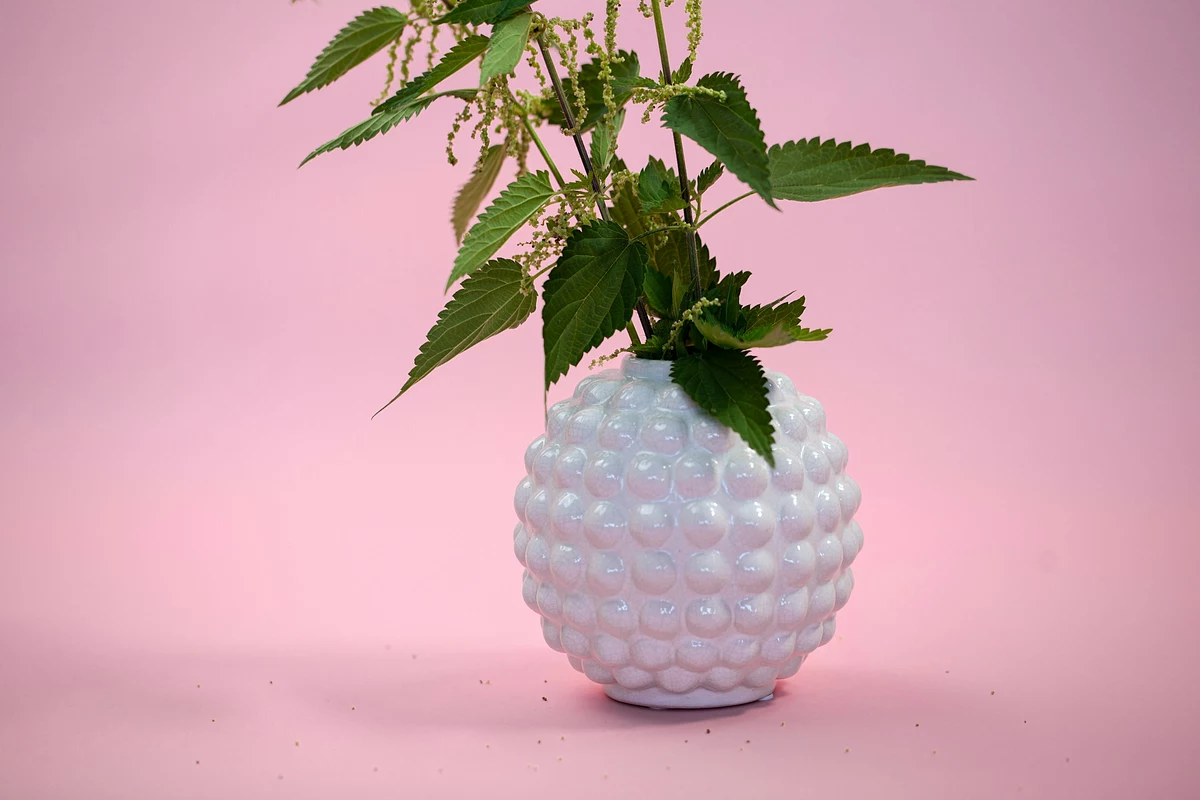
Nevertheless, my father established a regime of total obedience at home. This is strange, because in his family everything was quite liberal. A belt, stinging nettles while outdoors, an extension cord—everything was used.
This strongly affected me, adding a significant element of anxiety to my character. And also… I can’t call it sadism, but I developed a habit of getting my way through pressure and enjoying the process. In childhood, this manifested as fights with other children. In adulthood, it took the form of workplace toxicity.
As soon as I was able to recognize and overcome this, my career took off. At the moment, I lead a team of about ten people, and I do it in a very liberal style. Hardly anyone would believe now that I had to go through such experiences in childhood.
I don’t plan to use physical punishment on my children: I consider it an absolute taboo. It destroys human dignity and creates destructive patterns of handling disagreement. And between parents and children, violence establishes hierarchical relationships instead of trusting ones. Moreover, in the most primitive form, when hierarchy is based on physical violence.
This may be simpler for parents in the moment. But in the long run, it brings nothing but hatred. I’m happy that in the modern world such methods of upbringing have become unacceptable. I hope we are the last generation of beaten children.
I couldn’t forgive my father for a long time. I barely communicated with him for about 15 years. And even after that, «some residue remained.» And was it worth it?
As for Sergey*, he was beaten by his mother as a child:
—Her arsenal included a belt. This never led to hospitalization with a concussion. But it still had a certain influence on my development as a person. And hardly for the better. It’s difficult for me to trace the causal relationship between my character traits and this violence. But I see it, perhaps not so much in self-esteem, but in my attitude toward women, in which fear is clearly manifested.
I have a son, I love him, and I can’t imagine what would have to happen inside me for me to hit him with a belt.

As an adult, I tried to understand and imagine what was happening inside my mother when she used the belt on me. I tried to imagine how she had been treated in childhood (spoiler—in her family, everything was even worse, so I believe that violence against children is decreasing over generations).
I also understood why it’s important to read the classics. I read «The Brothers Karamazov» for the first time this year. The theme of violence against children and flogging in school is mentioned several times. For example, when passers-by asked a mischievous schoolboy if they still get flogged at school, and were greatly distressed when they learned that they don’t.
This is the mid-19th century. Yes, it’s not a fact that Dostoevsky accurately portrayed that reality, but it’s obvious that even then society was discussing whether it’s normal to beat children. Yet here we were in the 90s—still dealing with such nonsense.
I also think that my parents' generation saw the main measure of success in raising children as: «Well, at least he grew up, got educated, achieved something.» But I would suggest measuring parenting success by other metrics:
* — the narrator’s name has been changed



Релоцировались? Теперь вы можете комментировать без верификации аккаунта.
Зато людьми выросли =((
Бьет - значит любит
И коронное: я для тебя все, а ты матере даже не позвонишь.
Биць гэта прымитыўна, и не тое каб рыхтуе да жыцця, акрамя як у Беларуси.
Лепей вучыць кантрактам — камплаенс = 10 у.е. на тыдзень. Уборка, посуд, смецце таксама Н грошай. Я так прадпрымальницу вырасциў.
Платить за послушание и уборку - это дичь и выглядит как нездоровые отношения. Хз кого Вы там вырастили, но надеюсь конечно прекрасных здоровых счастливых людей, вопреки вашим подходам к воспитанию
Пользователь отредактировал комментарий 15 января 2026, 19:48
Выхаванне гэта пра падрыхтоўку да рэчаиснасци, а не симуляцыя сусвету ружовых пони.
скорее наемную РАБотницу.
Мне платили за сборку колорадских жуков. 10 рублей за одного. Правда на воспитание это никак не влияло. Зато начинаешь понимать что значит зарабатывать деньги)
Я даже не знаю чего написать. У меня такого не было. Было, конечно, всякое сложное, но чтобы на мне родители насилием оттягивались - не было такого никогда. Единственное, что могу сказать - мне очень жаль, что у вас такой опыт случился. К моему большому сожалению, мы сейчас тратим наш интеллектуальный ресурс на "более важные" штуки. Всем похер, что некоторые родители избивают детей или даже что-то хуже делают. Спасибо, что поделились. Вам сильно хуже чем мне внутри, но вы продолжаете двигаться. И вы - большие молодцы. Удачи вам и пусть всё у вас получится!
Пользователь отредактировал комментарий 16 января 2026, 00:28
+1 тут нечего обсуждать, все описанные истории лютая дичь и вопиющая несправедливость. Было бы интересно для разнообразия чтобы была история от человека которого били "справедливо", к примеру за то что сам бил младшего брата или сестру без повода, а не системно и просто за то что задачку решить не может.
Как они справились со своими травмами? Держат ли обиду на родителей?
К редакции.
Слова "айтишники", "ИИ", "инженер", вставленные в названия статей про воспитание, родственников, быт, язык, рекламу книг и др. социальные темы - не придают этим материалам IT специфику, а только, видимо, как-то "легализуют" желания авторов писать на IT ресурсе на любую тему.
Все эти темы несомненно важны, но для них есть множество других мест - и их гораздо больше, чем ресурсов про IT в связке с Беларусью.
Если бы таких тем было процентов 10-20, или они были в отдельной рубрике - это воспринималось бы с интересом. Но иногда на центральной странице нет ни одной статьи непосредственно про IT.
Складывается впечатление, что журналисты в эмиграции работают сразу в нескольких изданиях, размывая специфику каждого.
Мало того, что некоторые "рекрутеры" и "эйчары" заполонили IT отрасль псевдо-рабочим контентом, так еще и IT-издание дрейфует в сторону от рабочей тематики.
Стоит ли превращать уникальный ресурс в еще один безликий, похожий на сотни других?
Почему бы не писать чаще про болезненные рабочие отношения (между коллегами на одних или разных позициях), про сложные ситуации на работе, про работу (а не только быт) в разных странах. Анонимность компаний и имен здесь была бы даже предпочтительнее, чтобы они не отвлекали от сути. Это помогло бы специалистам, особенно, молодым, строить профессиональные отношения.
И на другие волнующие темы нашего IT с нашими особенностями, где бы мы ни находились сейчас.
Ну, ты душнила
Не ну меня конечно били. Жёстче всего, это когда удлинителем били. Но по-моему это было всегда за дело, более или менее))) Помню в начальной школе узнал такое слово "пиабол" Потом пришел домой и почему-то обиделся на деда и назвал его "пиаболом" Вот тогда мне прилетело удлинителем по мягкой точке. )))
А тут прям жесть вообще. Меня за двойки так не били. Ну прилетало конечно, но не жёстко...
И как, держите неизлечимую обиду на дедушку? :)
Нет, зачем)
Ну не знаю, некоторые считают что чувство "базовой безопасности" у ребёнка это бинарная вещь, которая разрушается одним необдуманным шлепком под зад, независимо от его справедливости
В 90-х в таком возрасте дети обычно думать неумели, а уж тем более затаить обиду в долгосрочной перспективе из-за пары слабых ударов по жопе. Так что на следующий день обычно звучало привычное "мама купи мне конфет" или что-то похожее и всё возвращалось в прижний ритм...
С появлением гаджетов дети начали умнеть намного быстрее, поэтому сейчас может такое и возможно. Но тут, я думаю, зависит ещё от нервной системы ребёнка.
Тут смотря куда бить. Если по попе то ребенок может стать бдсм-щиком, а если по голове то милиционером
Мы не на планете розовых пони живем, в этом мире и бьют, и убивают. Если подзатыльники приносят страдания, то что от человека ждать в случае войны, выражения озабоченности?